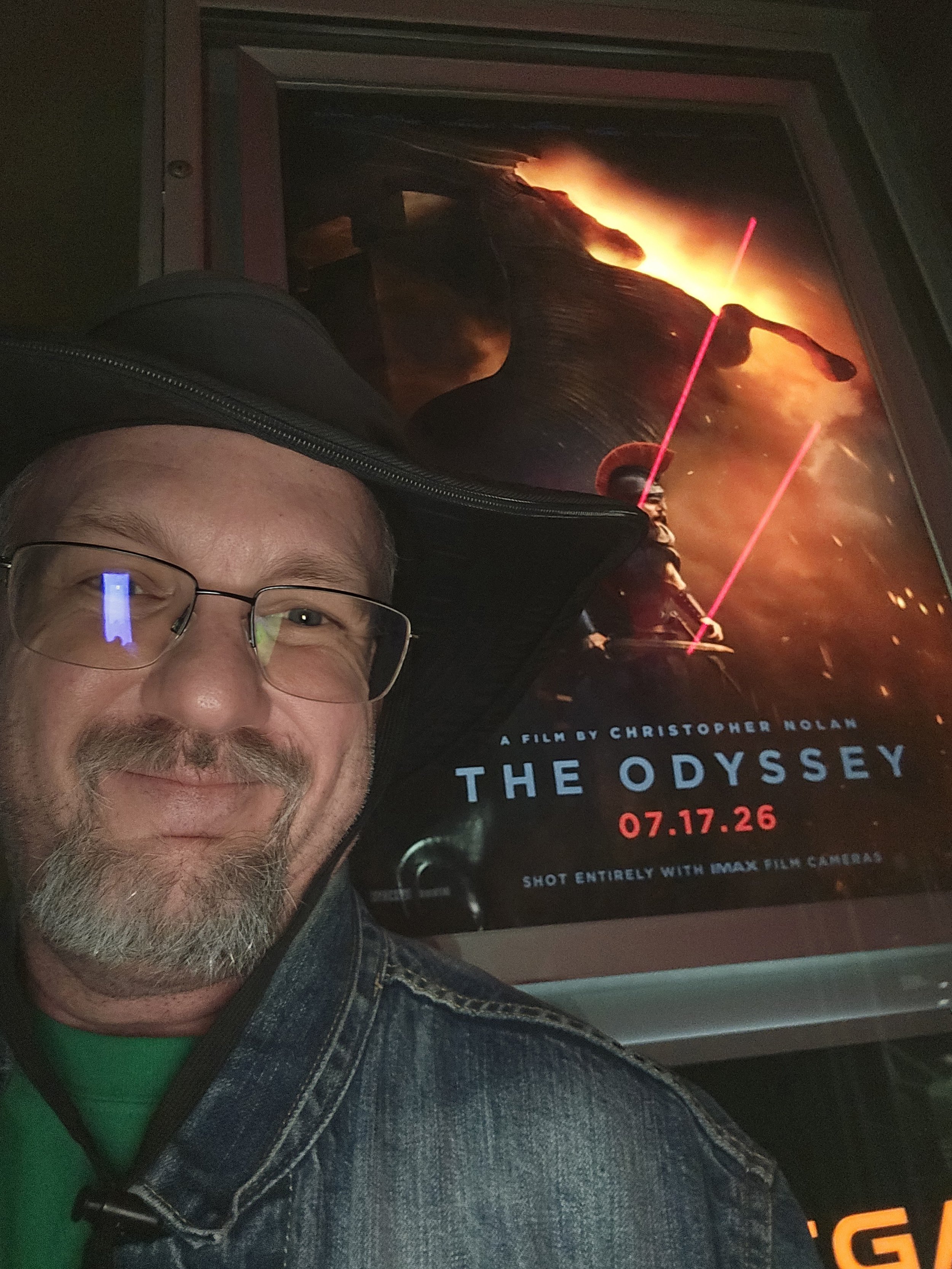
You all know I'm a mythology lover, so this will come as a shock: I really don't like either The Iliad or The Odyssey. However, I love Christopher Nolan movies, so I had to see this in Imax. Simply put, it does not disappoint.
Let's set aside the Imax presentation, which is phenomenal. This is the first Odyssey in print or film in which I actually cared about Odysseus. Though I haven't read Emily Wilson's 2017 translation, all other Odysseys I've encountered did not keep my interest. (And I've read all the speeches of Beowulf a few times, so I know mind-numbing epics!)
This Odysseus, however, is far more than the celebrated war hero overcoming men and Gods. This Odysseus is overcoming his own demons - made most manifest in a beautifully stark scene at the edge of Hades - and for me, that makes him far more engaging than he's ever been.
Odysseus knows he's broken The Law of Zeus, what we know today as The Golden Rule, but it was far more than that in the ancient world when it was really called "Xenia." I'll do a Mythology Minute on it soon because of this film. By breaking this Godly Law, he's broken the entire world, and he knows it. This Odysseus is a man who says he wants to return home but is also, deep down within his soul, unable and unwilling to do so because of the sins he committed during the war. That's a powerful story.
Ignoring all the obvious racist and homophobic social media rants, there are dozens of Right-Wing political posts that this film is "depressing." However, only if someone is unwilling (or unable) to engage in some serious soul-searching, or if someone believes their every action, no matter how horrific or vile, is approved by God, could a person see this film as depressing.
This Odyssey sets as its overarching theme that we can change, we can learn, we can overcome, and that the next generation will be even better than us in every way.
THAT is a powerful, positive message, and I loved The Odyssey for delivering it so clearly and powerfully.
Regarding Bechdels, it fails (as does the source material, to be fair): 1) There are several women in the film, but 2) they never speak with each other.